Program Details
14:15 – 15:30
Session 1 – AI-Based Media Coding: Standards and Innovations
Recent advances in AI-powered coding technologies and their implications for performance, interoperability, and scalability.
Overview of JPEG AI and JPEG Pleno standardization activities João Ascenso

João Ascenso
Instituto Superior Técnico – Universidade de Lisboa, Instituto de Telecomunicações, Portugal
João Ascenso is a professor at Instituto Superior Técnico and a researcher at Instituto de Telecomunicações, Lisbon. His work focuses on visual coding, quality assessment, and coding for machines. He is actively involved in international standardization, currently chairing the JPEG CPM subgroup and the JPEG AI ad-hoc group. He has published over 150 papers, received three Best Paper Awards, and served as associate editor for several IEEE journals.
Will Generative AI Upend Media Compression? Jona Ballé

Jona Ballé
Fraunhofer HHI, Germany
Abstract
Recent generative models allow us to condense an image or video into a human-readable caption, and conversely, generate plausible and realistic-looking imagery back from the text, for example using diffusion models. This suggests data compression methods with unprecedented bit rate to quality tradeoffs, where the encoder only needs to store the caption efficiently, and the decoder recovers high-quality images from the textual description. Will this concept of textual transform coding completely upend traditional media compression?
In this talk, I will discuss Wasserstein Distortion (WD), a full-reference image quality metric designed to capture visual texture perception rooted in statistical models of peripheral vision. I will demonstrate how employing a powerful perceptual model such as WD on overfitted image compression techniques can achieve a trade-off between visual quality and bit rate that is competitive with generative decoding techniques. Remarkably, the computational complexity of the decoder can be drastically lower (more than 100 times fewer MACs), which suggests that we may find practical techniques for next-generation visual media compression a long time before generative methods even become feasible.
Bio
Jona Ballé is an Associate Professor at New York University and a Group Lead at Fraunhofer Heinrich Hertz Institute, studying data compression, information theory and models of visual perception. She defended her master's and doctoral theses on signal processing and image compression under the supervision of Jens-Rainer Ohm at RWTH Aachen University in 2007 and 2012, respectively. This was followed by a brief collaboration with Javier Portilla at CSIC in Madrid, Spain, and a postdoctoral fellowship at New York University’s Center for Neural Science with Eero P. Simoncelli, where Jona studied the relationship between perception and image statistics. While there, she pioneered using machine learning for end-to-end optimized image compression – this work ultimately led to the JPEG AI standard, finalized in 2025. From 2017 to 2024, Jona deepened her ties to industry as a Research Scientist at Google, before returning to NYU in 2025 as an Associate Professor. Since 2026, she also leads a research group at Fraunhofer HHI in Berlin, Germany. Jona has served as a reviewer for top-tier publications in both machine learning and image processing, such as NeurIPS, ICLR, ICML, Picture Coding Symposium, and several IEEE Transactions journals. She has been active as a co-organizer of the annual Challenge on Learned Image Compression (CLIC) since 2018, and as a member of the program and steering committees of the Data Compression Conference (DCC) since 2022, and the Picture Coding Symposium (PCS) since 2025, respectively.
Coding for Machines: Efficient Visual Representations for AI Ivan Bajíc

Ivan V. Bajíc
Simon Fraser University, Canada
Abstract
As visual AI models continue to make their way from research labs to the real world, questions like how much data they need and how will these data be delivered to them become increasingly important. This talk will present a brief overview of the field of study related to efficient visual representations for AI-based analysis, also known as coding for machines. We will explain what makes coding for machines different from the conventional visual compression we all use daily. We will then talk about the current state of knowledge in the field and several recent standardization efforts. We will conclude the talk with several key challenges and some ideas on future progress in the field.
Bio
Ivan V. Bajić is a Professor of Engineering Science at Simon Fraser University in Canada. His research interests include signal processing and machine learning with applications to multimedia compression, communications, and analysis. He has contributed to JPEG AI, MPEG AI, and several earlier video coding standards. His work has appeared in leading venues in the field and has received several awards, most recently the 2023 TCSVT Best Paper Award and the 2023 IEEE MSA-TC Best Paper Award. He is a Past Chair of the IEEE Multimedia Signal Processing Technical Committee.
16:00 – 17:15
Session 2 – Trust, Metadata, and Authenticity in the AI Era
The authenticity implications of AI-based representation techniques and the role of standardization in ensuring trust, authenticity, and interoperability of AI-generated and AI-processed media.
Overview of JPEG Trust standardization activities Frederik Temmermans
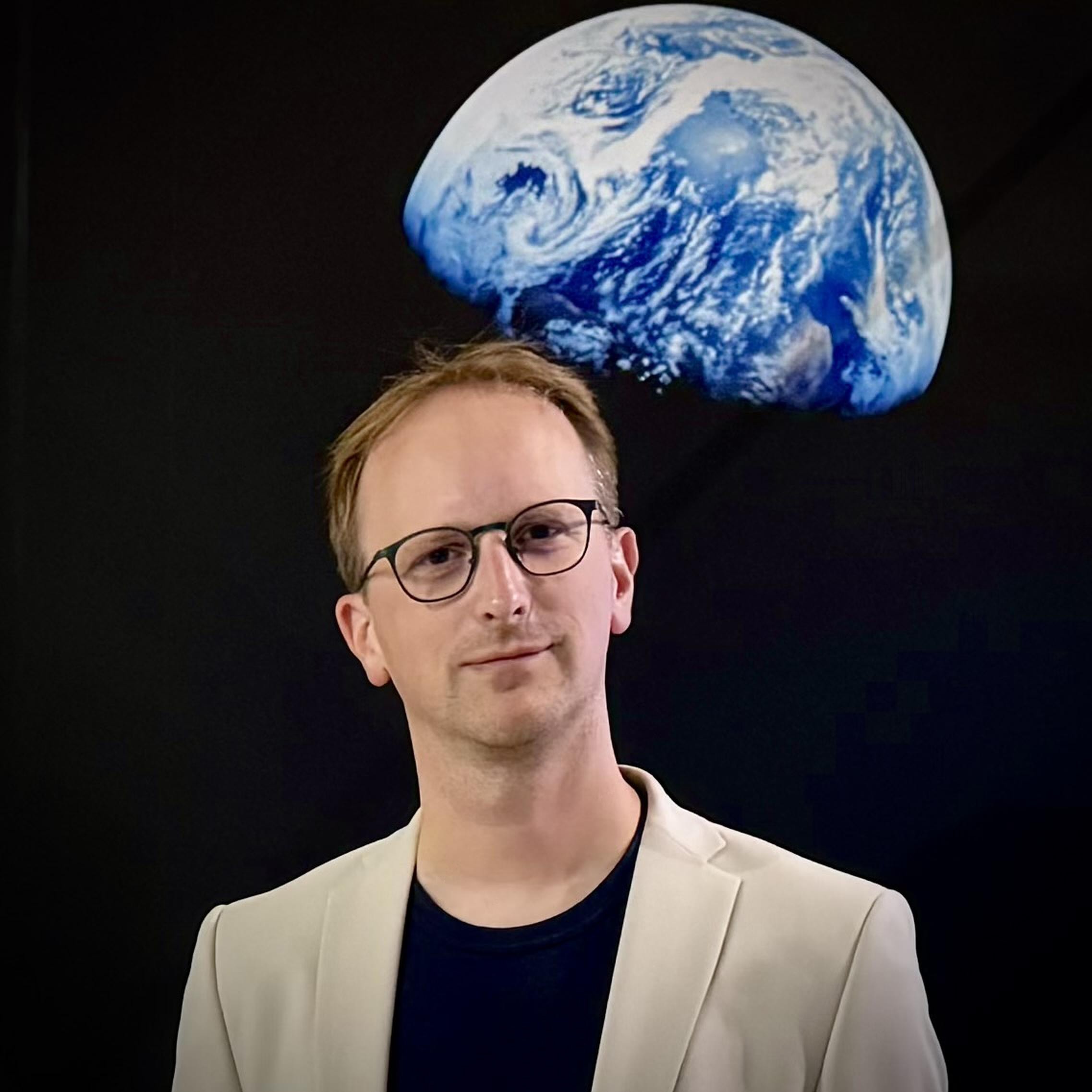
Frederik Temmermans
Vrije Universiteit Brussel, Belgium
Frederik Temmermans is guest professor in multimedia at the Department of Electronics and Informatics (ETRO), associated with the Vrije Universiteit Brussel and imec. His research focuses on media privacy, security, authenticity, and integrity. He has been involved in various research projects in the medical, mobile, and cultural domains. Frederik is an active member of the JPEG standardization committee (ISO/IEC JTC1/SC29/WG1) where he currently chairs the JPEG Systems and Integration subgroup and leads the JPEG Trust (ISO/IEC 21617) standardization activities. Frederik is also co-founder of the VUB spin-off company Universum Digitalis and member of the Photoconsortium Steering Committee.
Trust in the age of synthetic reality Mário Campolargo

Mário Campolargo
Universidade de Aveiro, Portugal
Abstract
Trust has to be a distinctive factor of a human driven digital environment, increasingly powered by AI, where misinformation, disinformation and synthetic media have the potential to undermine democratic debate, social cohesion and institutional legitimacy. The preservation of trust is contingent upon a harmonious balance between three fundamental pillars: technology, legislation and education. Standards emerge as infrastructures for trust. JPEG Trust represents a significant contribution towards interoperable frameworks for provenance, authenticity, integrity, attribution and rights management. Democratic institutions, research communities and innovators must cooperate to provide citizens and businesses with the information necessary to make informed judgments, in such a way that AI will realise its full potential as an extraordinary opportunity for the development new business models, the exploration of new scientific horizons and discoveries, and the unleashing of creativity, accessibility, education and culture, with positive impacts on economy and well-being of our societies.
Bio
Mário Campolargo is a Visiting Professor at the University of Aveiro. He previously served as Secretary of State for Digitalization and Administrative Modernisation in the Government of Portugal and as Director-General of DG DIGIT (Digital Services) at the European Commission.
He is an internationally recognized expert with extensive experience in the digital domain, particularly within international organizations. His expertise spans the design and implementation of public policies, strategic planning, research and innovation management, international negotiation, and consultancy.
Valorising knowledge through standardisation Carlos Morais Pires

Carlos Morais Pires
European Commission
Carlos Pires has been with the European Commission since 1998 with responsibilities in areas of the European R&I programmes such as digital networks and multimedia communication, scientific data infrastructures and high-performance computing.
He was a member of the Cabinet of Commissioner Mariya Gabriel for Research and Innovation and Education from 2020 to 2023, overseeing the European Research Area and the Horizon Europe Research and Innovation programme, including Industrial Partnerships.
He received his PhD in 1996 on Electronics Engineering from the University of Lisbon (Instituto Superior Técnico) and the CSELT Lab in Turin, Italy.
17:15 – 18:00
Session 3 – Round Table: Trustworthy Content in the Age of AI: Opportunities, Risks, and Responsibilities
As AI increasingly participates in the creation, transformation, distribution, and consumption of digital content, ensuring trust becomes a critical challenge. This panel will explore the opportunities offered by AI-enabled media, the risks associated with misinformation, manipulation, and loss of authenticity, and the responsibilities of technology developers, content creators, policymakers, and standards bodies. Particular attention will be given to how media representation standards can support transparency, provenance, interoperability, and trust for content intended for both humans and machines.
Fernando Pereira (Moderator)

Fernando Pereira
Instituto Superior Técnico – Universidade de Lisboa, Instituto de Telecomunicações, Portugal
Fernando Pereira is with the Department of Electrical and Computer Engineering at Instituto Superior Técnico, University of Lisbon, and the Instituto de Telecomunicações, Lisbon, Portugal. He has served as Chair of the MPEG Requirements Subgroup and the JPEG Requirements Subgroup, playing a leading role in the design of several high-impact international media standards, including, in recent years, JPEG Pleno, JPEG AI, and JPEG Trust.
He has authored more than 300 publications in international journals, conferences, and workshops, and has delivered numerous invited talks and tutorials worldwide. His research interests include video analysis, representation, coding, description, adaptation, and advanced multimedia services.
Fernando Pereira is an IEEE Fellow, an EURASIP Fellow, and an IET Fellow. He served as Vice President of the IEEE Signal Processing Society from 2018 to 2020 and has been a member of both the IEEE Signal Processing Society Board of Governors and the EURASIP Board of Directors. From 2013 to 2015, he was Editor-in-Chief of the IEEE Journal of Selected Topics in Signal Processing, and he has served as Associate Editor for several leading journals in the field.
Touradj Ebrahimi

Touradj Ebrahimi
École Polytechnique Fédérale de Lausanne, Switzerland
Touradj Ebrahimi is a Professor at the École Polytechnique Fédérale de Lausanne (EPFL) and Head of the Multimedia Signal Processing Group (MMSPG). Since 2014, he has served as Convenor of the JPEG Committee (ISO/IEC JTC 1/SC 29/WG 1), leading the development of several groundbreaking international standards, including JPEG XS for ultra-low-latency, high-quality imaging, JPEG XL for next-generation image compression, JPEG AI for AI-based image coding, JPEG Trust for multimedia authenticity in the era of synthetic media, as well as the emerging JPEG DNA standard for encoding digital data into synthetic DNA and JPEG XE, the world's first standard for coding event-based visual data for machine vision applications. These technologies have had a significant impact across industries including broadcasting, cinema, extended reality, social media, publishing, and digital archiving.
Professor Ebrahimi has authored more than 350 peer-reviewed publications, holds numerous patents, and has supervised over 50 doctoral theses. His contributions have been recognized with prestigious distinctions including the SMPTE Progress Medal, the IEEE Standards Medallion, and an Emmy Award from the National Academy of Television Arts & Sciences, among many other international honors.
Beyond academia, he is the founder and CEO of RayShaper SA, a Swiss company developing AI-driven imaging solutions with global impact, and he serves as a trusted advisor to governments, research agencies, and industry consortia, contributing to the definition of policies and technology roadmaps in areas such as trustworthy AI, media authenticity, and sustainable innovation.
Mário Campolargo
Mário Campolargo
Universidade de Aveiro, Portugal
Mário Campolargo is a Visiting Professor at the University of Aveiro. He previously served as Secretary of State for Digitalization and Administrative Modernisation in the Government of Portugal and as Director-General of DG DIGIT (Digital Services) at the European Commission.
He is an internationally recognized expert with extensive experience in the digital domain, particularly within international organizations. His expertise spans the design and implementation of public policies, strategic planning, research and innovation management, international negotiation, and consultancy.
Nuno Guimarães

Nuno Guimarães
ISCTE – Instituto Universitário de Lisboa, Portugal
Nuno M. Guimarães (b. 25.01.1960) got his Electrotechnical Engineering degree at Instituto Superior Técnico (IST/UTL), Portugal (1983), and the PhD in E&C Eng (1992).
He is a Full Professor since 2001 (ISCTE-University Institute of Lisbon, Faculty of Sciences, UL and IST/UTL (1992/1997)).
He was also a consultant (visiting researcher) for AT&T Bell Labs, Murray Hill, NJ, USA (1989-1991), invited Professor at the Technische Universität Berlin, Germany in 2010, Visiting scholar and Guest Professor at the Indian Institute of Technology Gandhinagar (IITGN), India, since 2013.
He was founder and member of the board of three startup IT companies (1999 to 2006). He is Senior Member of ACM (Association for Computing Machinery) since 2012.
His long time and current research interests include Human Computer Interaction & User Experience Design, and Law & Technology.
He is now pursuing a LLB (law degree) at the Faculty of Law of the University of Lisbon.